
U granitu hè un tipu di roccia ignea estratta per a so estrema forza, densità, durabilità è resistenza à a currusione. Ma u granitu hè ancu assai versatile - ùn hè micca solu per quadrati è rettanguli! In fatti, travagliamu cun fiducia cù cumpunenti di granitu ingegnerizzati in forme, anguli è curve di tutte e variazioni regularmente - cù risultati eccellenti.
Through our state of the art processing, cut surfaces can be exceptionally flat. These qualities make granite the ideal material to create custom-size and custom-design machine bases and metrology components. Granite is:
■ machinabile
■ precisamente pianu quandu hè tagliatu è finitu
■ resistente à a ruggine
■ durevule
■ di longa durata
I cumpunenti di granitu sò ancu faciuli da pulisce. Quandu create disinni persunalizati, assicuratevi di sceglie u granitu per i so vantaghji superiori.
STANDARD / APPLICAZIONI AD ALTA USURA
U granitu utilizatu da ZHHIMG per i nostri prudutti di piastre di superficia standard hà un altu cuntenutu di quarzu, chì furnisce una maggiore resistenza à l'usura è à i danni. I nostri culori Neri Superiori anu bassi tassi d'assorbimentu d'acqua, minimizendu a pussibilità chì i vostri calibri di precisione si arrugginiscinu mentre si mettenu nantu à e piastre. I culori di granitu offerti da ZHHIMG risultanu in menu riflessi, ciò chì significa menu affaticamentu di l'ochji per l'individui chì utilizanu e piastre. Avemu sceltu i nostri tipi di granitu tenendu contu di l'espansione termica in un sforzu di mantene questu aspettu minimu.
CUSTOM APPLICATIONS
Quandu a vostra applicazione richiede una piastra cù forme persunalizate, inserti filettati, fessure o altre lavorazioni, duverete sceglie un materiale cum'è u Jinan Neru Neru. Stu materiale naturale offre una rigidità superiore, un eccellente smorzamentu di e vibrazioni è una migliore lavorabilità.
Hè impurtante di nutà chì u culore solu ùn hè micca una indicazione di e qualità fisiche di a petra. In generale, u culore di u granitu hè direttamente ligatu à a presenza o l'assenza di minerali, chì ùn ponu micca avè alcuna influenza nantu à e qualità chì rendenu un bonu materiale per e piastre di superficia. Ci sò graniti rosa, grigi è neri chì sò eccellenti per e piastre di superficia, è ancu graniti neri, grigi è rosa chì sò totalmente inadatti per applicazioni di precisione. E caratteristiche critiche di u granitu, in quantu si riferiscenu à u so usu cum'è materiale per e piastre di superficia, ùn anu nunda à chì vede cù u culore, è sò e seguenti:
■ Rigidità (deflessione sottu carica - indicata da u Modulu di Elasticità)
■ Durezza
■ Densità
■ Resistenza à l'usura
■ Stabilità
■ Porosità
Avemu pruvatu parechji materiali di granitu è paragunatu questi materiali. Infine avemu ottenutu u risultatu, u granitu neru Jinan hè u megliu materiale chì avemu mai cunnisciutu. U granitu neru indianu è u granitu sudafricanu sò simili à u granitu neru Jinan, ma e so proprietà fisiche sò inferiori à u granitu neru Jinan. ZHHIMG continuerà à circà più materiali di granitu in u mondu è à paragunà e so proprietà fisiche.
Per parlà di più nantu à u granitu adattatu per u vostru prughjettu, cuntattateci.info@zhhimg.com.
Diversi pruduttori utilizanu diverse norme. Ci sò parechje norme in u mondu.
Norma DIN, ASME B89.3.7-2013 o Specificazione Federale GGG-P-463c (Piastre di Superficie in Granitu) è cusì via cum'è basa per e so specifiche.
È pudemu fabricà piastre d'ispezione di precisione in granitu secondu i vostri bisogni. Benvenuti à cuntattateci se vulete sapè più infurmazioni nantu à più standard.
A planarità pò esse cunsiderata cum'è tutti i punti di a superficia chì sò cuntenuti in dui piani paralleli, u pianu di basa è u pianu di u tettu. A misura di a distanza trà i piani hè a planarità generale di a superficia. Sta misura di planarità porta cumunemente una tolleranza è pò include una designazione di gradu.
Per esempiu, e tolleranze di planarità per trè gradi standard sò definite in a specificazione federale cum'è determinata da a seguente formula:
■ AA di qualità di laburatoriu = (40 + diagonale quadrata/25) x 0,000001" (unilaterale)
■ Gradu d'ispezione A = Gradu di laburatoriu AA x 2
■ Sala di l'arnesi Gradu B = Gradu di laburatoriu AA x 4.
Per e piastre di superficia di dimensioni standard, guarantimu tolleranze di planarità chì superanu i requisiti di sta specificazione. In più di a planarità, ASME B89.3.7-2013 è a Specificazione Federale GGG-P-463c trattanu temi cum'è: precisione di misurazione ripetuta, proprietà di i materiali di i graniti di e piastre di superficia, finitura superficiale, pusizione di i punti di supportu, rigidità, metudi d'ispezione accettabili, installazione di inserti filettati, ecc.
E piastre di superficia di granitu ZHHIMG è e piastre d'ispezione di granitu soddisfanu o superanu tutti i requisiti stabiliti in questa specificazione. Attualmente, ùn ci hè nisuna specificazione definitoria per e piastre angulari di granitu, parallele o squadre maestri.
È pudete truvà e formule per altri standard inSCARICÀ.
Prima, hè impurtante di mantene a piastra pulita. A polvera abrasiva in l'aria hè di solitu a più grande fonte di usura di una piastra, postu chì tende à incrustà si in i pezzi di travagliu è in e superfici di cuntattu di i calibri. Siconda, copre a piastra per prutege la da a polvera è da i danni. A durata di usura pò esse allungata coprendu a piastra quandu ùn hè micca in usu, ruotendu a piastra periodicamente in modu chì una sola zona ùn riceve micca un usu eccessivu, è rimpiazzendu i cuscinetti di cuntattu in acciaio nantu à u calibru cù cuscinetti in carburo. Inoltre, evitate di mette alimenti o bevande analcoliche nantu à a piastra. Nutate bè chì parechje bevande analcoliche cuntenenu acidu carbonicu o fosforicu, chì pò scioglie i minerali più morbidi è lascià picculi pozzi in a superficia.
Questu dipende da cumu si usa a piastra. Se pussibule, ricumandemu di pulisce a piastra à l'iniziu di a ghjurnata (o di u turnu di travagliu) è di novu à a fine. Se a piastra si sporca, in particulare cù fluidi oleosi o appiccicosi, deve esse probabilmente pulita subitu.
Pulite a piastra regularmente cù un liquidu o un detergente per piastre di superficia senza acqua ZHHIMG. A scelta di e soluzioni di pulizia hè impurtante. Sè si usa un solvente volatile (acetone, diluente per lacca, alcolu, ecc.) l'evaporazione raffredderà a superficia è a distorcerà. In questu casu, hè necessariu lascià a piastra nurmalizà si prima di usalla o si verificaranu errori di misurazione.
U tempu necessariu per chì a piastra si nurmalizzi varierà secondu a dimensione di a piastra è a quantità di raffreddamentu. Un'ora duveria esse sufficiente per e piastre più chjuche. Dui ore puderanu esse necessarie per e piastre più grande. Sè si usa un detergente à basa d'acqua, ci serà ancu un pocu di raffreddamentu evaporativu.
A piastra ritenerà ancu l'acqua, è questu puderia causà a ruggine di e parti metalliche in cuntattu cù a superficia. Certi detergenti lasceranu ancu un residu appiccicaticciu dopu à esse asciutti, chì attirerà a polvera in aria, è in realtà aumenterà l'usura, invece di diminuisce.
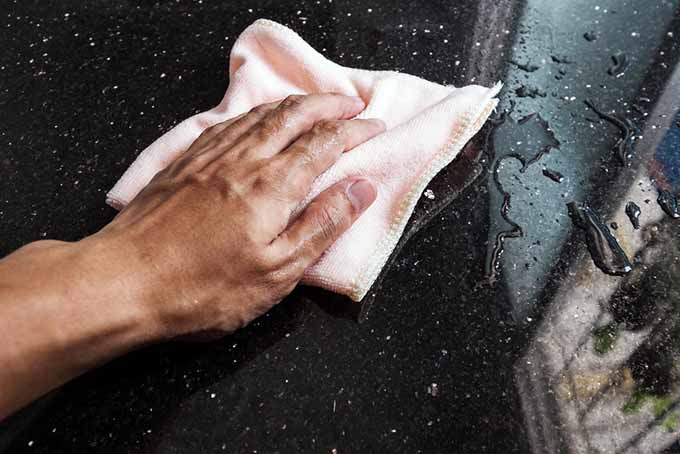
Questu dipende da l'usu di a piastra è da l'ambiente. Ricumandemu chì una nova piastra o un accessorio di granitu di precisione ricevi una ricalibrazione cumpleta in un annu da l'acquistu. Se a piastra di superficia di granitu serà aduprata assai, pò esse cunsigliatu di riduce questu intervallu à sei mesi. L'ispezione mensile per errori di misurazione ripetuti cù un livellu elettronicu, o un dispositivu simile, mostrerà qualsiasi macchie di usura in sviluppu è richiede solu uni pochi di minuti per esse eseguita. Dopu chì i risultati di a prima ricalibrazione sò stati determinati, l'intervallu di calibrazione pò esse allargatu o accorciatu cum'è permessu o richiestu da u vostru sistema di qualità internu.
Pudemu offre un serviziu per aiutà vi à ispezionà è calibrà a vostra piastra di superficia di granitu.

Ci sò parechje cause pussibuli di variazioni trà e calibrazioni:
- A superficia hè stata lavata cù una suluzione calda o fredda prima di a calibrazione, è ùn hè statu lasciatu abbastanza tempu per nurmalizà si.
- A piastra hè mal supportata
- Cambiamentu di temperatura
- Bozze
- Luce diretta di u sole o altru calore radiante nantu à a superficia di a piastra. Assicuratevi chì l'illuminazione di u tettu ùn riscaldi micca a superficia.
- Variazioni di u gradiente di temperatura verticale trà l'inguernu è l'estate (Se pussibule, cunnosce a temperatura di u gradiente verticale à u mumentu di a calibrazione).
- A piastra ùn hà micca avutu abbastanza tempu per nurmalizà si dopu a spedizione
- Usu impropriu di l'attrezzatura d'ispezione o usu di l'attrezzatura micca calibrata
- Cambiamentu di a superficia risultante da l'usura
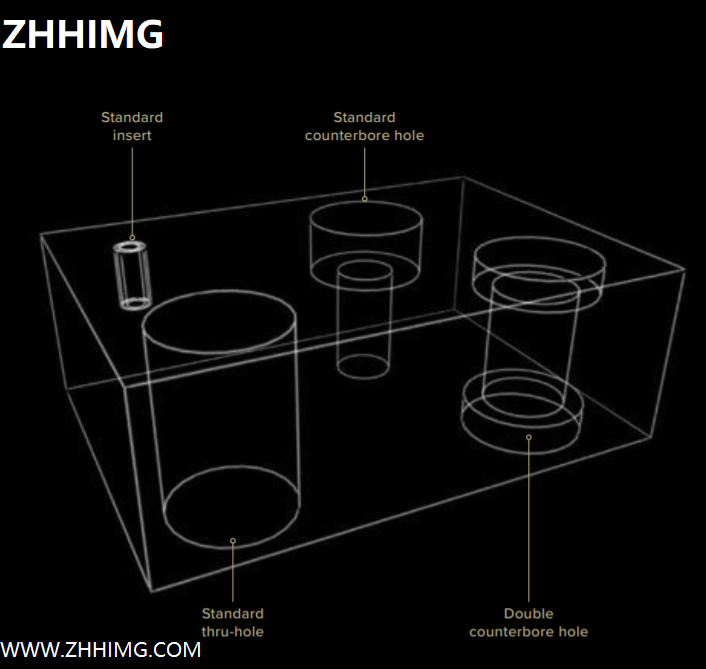
Quanti tipi di buchi ci sò nantu à u granitu di precisione?
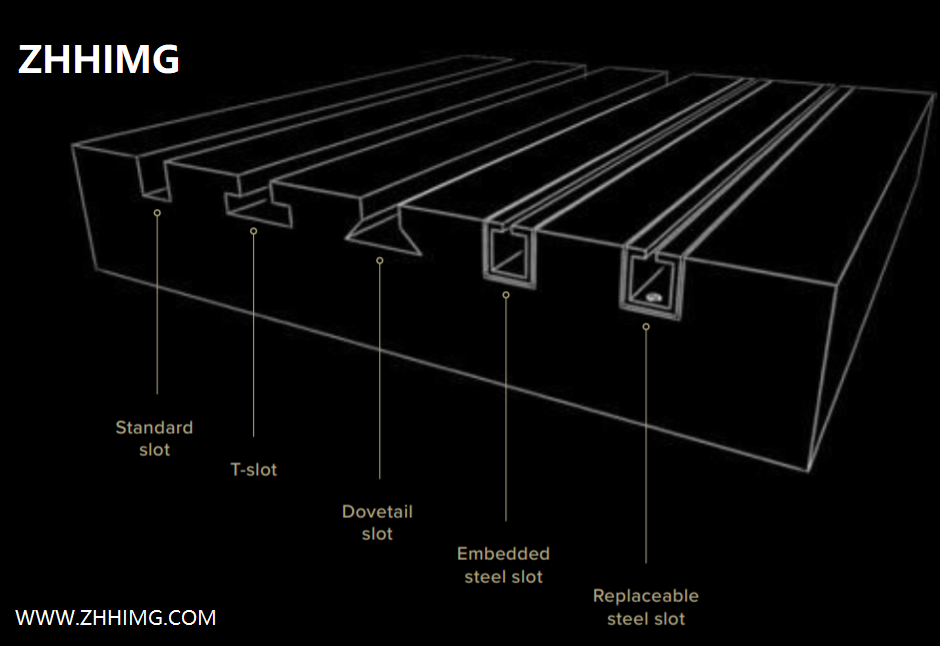
Slot nantu à i cumpunenti di granitu di precisione
Per parechje fabbriche, sale d'ispezione è laboratori, e piastre di superficia di granitu di precisione sò aduprate cum'è basa per una misurazione precisa. Siccomu ogni misurazione lineare dipende da una superficia di riferimentu precisa da a quale sò pigliate e dimensioni finali, e piastre di superficia furniscenu u megliu pianu di riferimentu per l'ispezione di u travagliu è u layout prima di a machinazione. Sò ancu basi ideali per fà misurazioni di altezza è superfici di misurazione. Inoltre, un altu gradu di planarità, stabilità, qualità generale è fattura li rendenu una bona scelta per u montaggio di sistemi di misurazione meccanichi, elettronichi è ottici sofisticati. Per qualsiasi di questi prucessi di misurazione, hè imperativu mantene e piastre di superficia calibrate.
Repeat Measurements and Flatness
Sia a planarità sia e misurazioni ripetute sò critiche per assicurà una superficia precisa. A planarità pò esse cunsiderata cum'è tutti i punti di a superficia chì sò cuntenuti in dui piani paralleli, u pianu di basa è u pianu di u tettu. A misurazione di a distanza trà i piani hè a planarità generale di a superficia. Sta misurazione di planarità porta cumunemente una tolleranza è pò include una designazione di gradu.
The flatness tolerances for three standard grades are defined in the federal specification as determined by the following formula:
Standard DIN, Standard GB, Standard ASME, standard JJS... paese differente cù stand differente...
Più dettagli nantu à u standard.
In addition to flatness, repeatability must be ensured. A repeat measurement is a measurement of local flatness areas. It is a measurement taken anywhere on the surface of a plate that will repeat within the stated tolerance. Controlling local area flatness to a tighter tolerance than overall flatness guarantees a gradual change in surface flatness profile, thereby minimizing local errors.
Per assicurà chì una piastra di superficia rispetti e specificazioni di planarità è di ripetizione di misurazione, i pruduttori di piastre di superficia in granitu devenu aduprà a Specificazione Federale GGG-P-463c cum'è basa per e so specificazioni. Questa norma tratta di a precisione di a ripetizione di misurazione, e proprietà di u materiale di u granitu di a piastra di superficia, a finitura di a superficia, a pusizione di u puntu di supportu, a rigidità, i metudi accettabili di ispezione è l'installazione di inserti filettati.
Checking Plate Accuracy
Seguendu uni pochi di semplici linee guida, un investimentu in una piastra di superficie in granitu duveria durà parechji anni. Sicondu l'usu di a piastra, l'ambiente di l'officina è a precisione richiesta, a frequenza di verificazione di a precisione di a piastra di superficie varia. Una regula generale hè chì una nova piastra riceve una ricalibrazione cumpleta in un annu da l'acquistu. Se a piastra hè aduprata frequentemente, hè cunsigliatu di riduce questu intervallu à sei mesi.
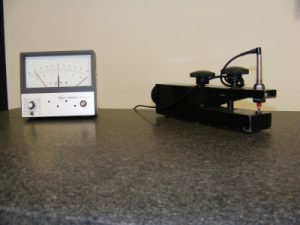
Before a surface plate has worn beyond specification for overall flatness, it will show worn or wavy posts. Monthly inspection for repeat measurement errors using a repeat reading gage will identify wear spots. A repeat reading gage is a high-precision instrument that detects local error and can be displayed on a high magnification electronic amplifier.
An effective inspection program should include regular checks with an autocollimator, providing actual calibration of overall flatness traceable to National Institute of Standards and Technology (NIST). Comprehensive calibration by the manufacturer or an independent company is necessary from time to time.
Variations Between Calibrations
In certi casi, ci sò variazioni trà e calibrazioni di e piastre di superficia. Calchì volta fattori cum'è u cambiamentu di a superficia risultante da l'usura, l'usu incorrectu di l'attrezzatura d'ispezione o l'usu di attrezzatura micca calibrata ponu spiegà queste variazioni. I dui fattori più cumuni, però, sò a temperatura è u supportu.
One of the most important variables is temperature. For instance, the surface might have been washed with a hot or cold solution prior to calibration and not allowed sufficient time to normalize. Other causes of temperature change include drafts of cold or hot air, direct sunlight, overhead lighting or other sources of radiant heat on the surface of the plate.
There also can be variations in the vertical temperature gradient between winter and summer. In some cases, the plate is not allowed sufficient time to normalize after shipment. It is a good idea to record the vertical gradient temperature at the time the calibration is performed.
Another common cause for calibration variation is a plate that is improperly supported. A surface plate should be supported at three points, ideally located 20% of the length in from the ends of the plate. Two supports should be located 20% of the width in from the long sides, and the remaining support should be centered.
Only three points can rest solidly on anything but a precision surface. Attempting to support the plate at more than three points will cause the plate to receive its support from various combinations of three points, which will not be the same three points on which it was supported during production. This will introduce errors as the plate deflects to conform to the new support arrangement. Consider using steel stands with support beams designed to line up with the proper support points. Stands for this purpose are generally available from the surface plate manufacturer.
If the plate is properly supported, precise leveling is only necessary if an application specifies it. Leveling is not necessary to maintain the accuracy of a properly supported plate.
Extend Plate Life
Seguità uni pochi di linee guida riducerà l'usura di una piastra di granitu è, infine, ne allargherà a vita.
Prima, hè impurtante di mantene a piastra pulita. A polvera abrasiva in aria hè di solitu a più grande fonte di usura di una piastra, postu chì tende à incrustà si in i pezzi di travagliu è in e superfici di cuntattu di i calibri.
It also is important to cover plates to protect it from dust and damage. Wear life can be extended by covering the plate when not in use.
Girate a piastra periodicamente in modu chì una sola zona ùn sia micca usata eccessivamente. Inoltre, hè cunsigliatu di rimpiazzà i cuscinetti di cuntattu in acciaio nantu à a misurazione cù cuscinetti in carburo.
Avoid setting food or soft drinks on the plate. Many soft drinks contain either carbonic or phosphoric acid, which can dissolve the softer minerals and leave small pits in the surface.
Where to Relap
Quandu una piastra di granitu hà bisognu di esse rifatta, cunsiderate se fà stu serviziu in situ o in u centru di calibrazione. Hè sempre preferibile fà rifatta a piastra in fabbrica o in un centru dedicatu. Tuttavia, se a piastra ùn hè micca troppu usurata, generalmente in 0,001 pollici di a tolleranza richiesta, pò esse rifatta in situ. Se una piastra hè usurata à tal puntu chì hè più di 0,001 pollici fora di tolleranza, o se hè assai sbucciata o intaccata, allora deve esse mandata à a fabbrica per a macinazione prima di a rifatta.
A calibration facility has the equipment and factory setting providing the optimum conditions for proper plate calibration and rework if necessary.
Ci vole à esse assai attenti à sceglie un tecnicu di calibrazione è di rifacimentu in situ. Richiede l'accreditazione è verificate chì l'attrezzatura chì u tecnicu aduprerà hà una calibrazione tracciabile. L'esperienza hè ancu un fattore impurtante, postu chì ci vole parechji anni per amparà à sovrapporre currettamente u granitu di precisione.
Critical measurements start with a precision granite surface plate as a baseline. By ensuring a reliable reference by using a properly calibrated surface plate, manufacturers have one of the essential tools for reliable measurements and better quality parts.Q
Checklist for Calibration Variations
1. A superficia hè stata lavata cù una suluzione calda o fredda prima di a calibrazione è ùn hè stata lasciata abbastanza tempu per nurmalizà si.
2. A piastra hè supportata in modu incorrectu.
3. Cambiamentu di temperatura.
4. Bozze.
5. Luce diretta di u sole o altru calore radiante nantu à a superficia di a piastra. Assicuratevi chì l'illuminazione di u tettu ùn riscaldi micca a superficia.
6. Variazioni di u gradiente verticale di temperatura trà l'inguernu è l'estate. Se pussibule, cunniscite a temperatura di u gradiente verticale à u mumentu di a calibrazione.
7. A piastra ùn hà micca avutu abbastanza tempu per nurmalizà si dopu a spedizione.
8. Usu impropriu di l'attrezzatura d'ispezione o usu di l'attrezzatura micca calibrata.
9. Cambiamentu di superficia risultatu da l'usura.
Tech Tips
- Siccomu ogni misurazione lineare dipende da una superficia di riferimentu precisa da a quale sò pigliate e dimensioni finali, e piastre di superficia furniscenu u megliu pianu di riferimentu per l'ispezione di u travagliu è u layout prima di a machinazione.
- Controlling local area flatness to a tighter tolerance than overall flatness guarantees a gradual change in surface flatness profile, thereby minimizing local errors.
- Un prugramma d'ispezione efficace deve include cuntrolli regulari cù un autocollimatore, chì furnisce una calibrazione effettiva di a planarità generale tracciabile à l'Autorità Naziunale d'Ispezione.
Trà e particelle minerali chì custituiscenu u granitu, più di u 90% sò feldspatu è quarzu, di i quali u feldspatu hè u più. U feldspatu hè spessu biancu, grisgiu è rossu carne, è u quarzu hè per u più incolore o biancu grisgiu, chì custituiscenu u culore basicu di u granitu. U feldspatu è u quarzu sò minerali duri, è hè difficiule di spustalli cù un cultellu d'acciaiu. In quantu à e macchie scure in u granitu, principalmente mica nera, ci sò alcuni altri minerali. Ancu s'è a biotite hè relativamente dolce, a so capacità di resistere à u stress ùn hè micca debule, è à u listessu tempu ne anu una piccula quantità in u granitu, spessu menu di u 10%. Questa hè a cundizione materiale in a quale u granitu hè particularmente forte.
Un'altra ragione per a quale u granitu hè forte hè chì e so particelle minerali sò strettamente ligate trà di elle è sò incrustate l'una in l'altra. I pori spessu rapprisentanu menu di l'1% di u vulume tutale di a roccia. Questu dà à u granitu a capacità di resiste à forti pressioni è ùn hè micca facilmente penetratu da l'umidità.
I cumpunenti di granitu sò fatti di petra senza resistenza à a ruggine, à l'acidu è à l'alcali, bona resistenza à l'usura è longa durata di serviziu, senza manutenzione speciale. I cumpunenti di precisione di granitu sò principalmente usati in l'utensili di l'industria di e macchine. Dunque, sò chjamati cumpunenti di precisione di granitu o cumpunenti di granitu. E caratteristiche di i cumpunenti di precisione di granitu sò basicamente listesse à quelle di e piattaforme di granitu. Introduzione à l'utensili è a misurazione di i cumpunenti di precisione di granitu: A machinazione di precisione è a tecnulugia di micromachinazione sò direzzioni di sviluppu impurtanti di l'industria di a fabricazione di macchine, è sò diventate un indicatore impurtante per misurà un livellu high-tech. U sviluppu di a tecnulugia d'avanguardia è l'industria di a difesa hè inseparabile da a machinazione di precisione è a tecnulugia di micromachinazione. I cumpunenti di granitu ponu esse scorri senza intoppi in a misurazione, senza stagnazione. A misurazione di a superficia di travagliu, i graffi generali ùn influenzanu micca a precisione di a misurazione. I cumpunenti di granitu devenu esse cuncipiti è prudutti secondu i requisiti di a dumanda.
Campu d'applicazione:
Cum'è tutti sapemu, sempre più macchine è attrezzature sceglienu cumpunenti di granitu di precisione.
I cumpunenti di granitu sò aduprati per u muvimentu dinamicu, i motori lineari, CMM, CNC, macchine laser...
Benvenuti à cuntattateci per più infurmazioni.
I dispusitivi di misurazione di granitu è i cumpunenti meccanichi di granitu sò fatti di granitu neru Jinan di alta qualità. Per via di a so alta precisione, longa durata, bona stabilità è resistenza à a corrosione, sò stati sempre più aduprati in l'ispezione di i prudutti di l'industria muderna è in settori scientifichi cum'è l'aerospaziale meccanica è a ricerca scientifica.
Vantaghji
---- Duie volte più duru chè a ghisa;
---- I cambiamenti minimi di dimensione sò dovuti à i cambiamenti di temperatura;
---- Senza strizzatura, dunque ùn ci hè micca interruzzione di u travagliu;
---- Senza sbavature o sporgenze per via di a struttura à grana fina è di l'appiccicosità insignificante, chì garantisce l'altu gradu di planarità per una longa vita di serviziu è ùn provoca danni à altre parti o strumenti;
---- Funzionamentu senza prublemi per l'usu cù materiali magnetichi;
---- Longa vita è senza ruggine, cù costi di manutenzione bassi.
E piastre di superficie in granitu di precisione sò lappate di precisione à un altu standard di planarità per ottene precisione è sò aduprate cum'è basa per u montaggio di sistemi di misurazione meccanica, elettronica è ottica sofisticati.
Alcune di e caratteristiche uniche di a piastra di superficia di granitu:
Uniformità in Durezza;
Precisu sottu cundizioni di carica;
Assorbente di vibrazioni;
Facile da pulisce;
Resistente à l'involucru;
Bassa porosità;
Non abrasivu;
Non magneticu
Vantaghji di a piastra di superficia di granitu
First, the rock after a long period of natural aging, uniform structure, coefficient minimum, the internal stress completely disappear, not deformed, so the precision is high.
Mandà un email
Skype
Inglese
Tedescu
Francese
Portughese
Spagnolu
Ghjappunese
Coreanu
Arabu
Irlandese
Grecu
Turcu
Talianu
Danese
Rumenu
Indonesianu
Ceccu
Svedese
Pulaccu
Vascu
Catalanu
Esperantu
Hindi
Lao
Albanese
Amaricu
Armenu
Azerbaigianu
Bielorussu
PBengali
Bosniacu
Bulgaru
Cebuanu
Chichewa
Corsu
Cruatu
Ulandesa
Estone
Filippinu
Finlandese
Frisone
Galizianu
Georgianu
Gujarati
Haitianu
Hausa
HawaiianuEbraicuHmong
UnghereseIslandesuIgbo
GiavaneseKannada
Kazakh
Khmer
Curdu
Kyrgyz
Latinu
Lettone
Littuanianu
Lussemburgu..
Macedone
Malgasciu
Malese
Malayalam
Maltese
Maori
Marathi
Mongolianu
Birmanu
Nepalese
Novegese
Pashto
Persianu
Punjabi
Serbianu
Sesotho
Singalese
Sluvaccu
- Sluvenu
- Somalianu
- Samoanu
- Gaèlicu Scozzese
- Shona
- Sindhi
- Sundanese
- Swahili
- Tagiccu
- Tamil
- Telugu
Thai
Ucrainu
UrduAUzbecu2VietnamitaLGalleseAXhosa
Yiddish
Yoruba
Zulu
Kinyarwanda
Tataru
Turchmennu
Uyghur
Cinese
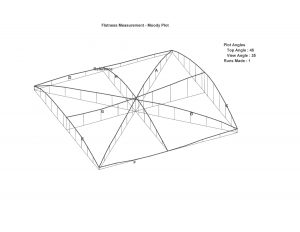
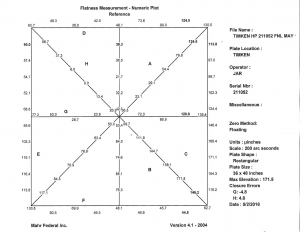
Routine surface plate calibration is necessary to ensure flatness and repeatability over time. The precision measurement group at Cross is ISO 17025 accredited for calibration of surface plate flatness and repeatability. We utilize the Mahr Surface Plate Certification System featuring:
- Moody and Profile Analysis,
- Isometric or Numeric plots,
- Multiple Run Average, and
- Automatic Grading According to Industry Standards.
The Mahr Computer Assisted Model determines any angular or linear deviation from absolute level, and is ideally suited for highly precise profiling of surface plates.
Intervals between calibrations will vary depending on the frequency of use, the environmental conditions where the plate is located, and the specific quality requirements of your company. Properly maintaining your surface plate may allow for longer intervals between each calibration, helps you avoid the added cost of relapping, and most importantly ensures the measurements you obtain on the plate are as accurate as possible. Although surface plates appear robust, they are precision instruments and should be treated as such. Here are some things to consider regarding care of your surface plates:
- Keep the plate clean, and if possible cover it when it is not in use
- Nothing should be placed on the plate other than gages or pieces to be measured.
- Don’t use the same spot on the plate every time.
- If possible, rotate the plate periodically.
- Respect the load limit of your plate
Precision Granite Base Can Improve Machine Tool Performances
Requirements are constantly increasing in mechanical engineering in general and in machine tool construction in particular. Achieving maximum precision and performance values without increasing costs are constant challenges to being competitive. The machine tool bed is a decisive factor here. Therefore, more and more machine tool manufacturers are relying on granite. Due to its physical parameters, it offers clear advantages that cannot be achieved with steel or polymer concrete.
Granite is a so-called volcanic deep rock and has a very dense and homogeneous structure with an extremely low coefficient of expansion, low thermal conductivity and high vibration damping.
Below you will discover why the common opinion that granite is mainly only suitable as machine base for high-end coordinate measuring machines is long outdated and why this natural material as a machine tool base is a very advantageous alternative to steel or cast iron even for high-precision machine tools.
We can manufacture granite components for dynamic motion, granite components for linear motors, granite components for ndt, granite components for xray, granite components for cmm, granite components for cnc, granite precision for laser, granite components for aerospace, granite components for precision stages...
High Added Value Without Additional Costs
The increasing use of granite in mechanical engineering is not so much due to the massive increase in the price of steel. Rather, it is because the added value for the machine tool achieved with a machine bed made of granite is possible at very little or no extra cost. This is proven by cost comparisons of well-known machine tool manufacturers in Germany and Europe.
The considerable gain in thermodynamic stability, vibration damping and long-term precision made possible by granite cannot be achieved with a cast iron or steel bed, or only at relatively high cost. For example, thermal errors can account for up to 75% of the total error of a machine, with compensation often attempted for by software – with moderate success. Due to its low thermal conductivity, granite is the better foundation for long-term precision.
With a tolerance of 1 μm, granite easily meets the flatness requirements according to DIN 876 for the degree of accuracy 00. With a value of 6 on the hardness scale 1 to 10, it is extremely hard, and with its specific weight of 2.8g/cm³ it almost reaches the value of aluminium. This also results in additional advantages such as higher feed rates, higher axis accelerations and an extension of the tool life for cutting machine tools. Thus, the change from a cast bed to a granite machine bed moves the machine tool in question into the high-end class in terms of precision and performance – at no extra cost.
Granite’s Improved Ecological Footprint
In contrast to materials such as steel or cast iron, natural stone does not have to be produced with a great deal of energy and using additives. Only relatively small amounts of energy are required for quarrying and surface treatment. This results in a superior ecological footprint, which even at the end of a machine’s life surpasses that of steel as a material. The granite bed can be the basis for a new machine or be used for completely different purposes such as shredding for road construction.
Nor are there any shortages of resources for granite. It is a deep rock formed from magma within the earth’s crust. It has ‘matured’ for millions of years and is available in very large quantities as a natural resource on almost all continents, including all of Europe.
Conclusion: The numerous demonstrable advantages of granite compared to steel or cast iron justify the increasing willingness of mechanical engineers to use this natural material as a foundation for high-precision, high-performance machine tools. Detailed information about granite properties, which are advantageous for machine tools and mechanical engineering, can be found in this further article.
A repeat measurement is a measurement of local flatness areas. The Repeat Measurement specification states that a measurement taken anywhere on the surface of a plate will repeat within the stated tolerance. Controlling local area flatness tighter than overall flatness guarantees a gradual change in surface flatness profile thereby minimizing local errors.
Most manufacturers, including imported brands, adhere to the Federal Specification of overall flatness tolerances but many overlook the repeat measurements. Many of the low value or budget plates available in the market today will not guarantee repeat measurements. A manufacturer who does not guarantee repeat measurements is NOT producing plates that meet the requirements of ASME B89.3.7-2013 or Federal Specification GGG-P-463c, or DIN 876, GB, JJS...
Both are critical to ensure a precision surface for accurate measurements. Flatness specification alone is not sufficient to guarantee measurement accuracy. Take as an example, a 36 X 48 Inspection Grade A surface plate, which meets ONLY the flatness specification of .000300". If the piece being checked bridges several peaks, and the gage being used is in a low spot, the measurement error could be the full tolerance in one area, 000300"! Actually, it can be much higher if the gage is resting on the slope of an incline.
Errors of .000600"-.000800" are possible, depending upon the severity of the slope, and the arm length of the gage being used. If this plate had a Repeat Measurement specification of .000050"F.I.R. then the measurement error would be less than .000050" regardless of where the measurement is taken on the plate. Another problem, which usually arises when an untrained technician attempts to resurface a plate on-site, is the use of Repeat Measurements alone to certify a plate.
The instruments that are used to verify repeatability are NOT designed to check overall flatness. When set to zero on a perfectly curved surface, they will continue to read zero, whether that surface is perfectly flat or perfectly concave or convex 1/2"! They simply verify the uniformity of the surface, not the flatness. Only a plate that meets both the flatness specification AND the repeat measurement specification truly meets the requirements of ASME B89.3.7-2013 or Federal Specification GGG-P-463c.
Ask us about or flatness specification and repeat measurement promise by calling +86 19969991659 or emailing INFO@ZHHIMG.COM
Yes, but they can only be guaranteed for a specific vertical temperature gradient. The effects of thermal expansion on the plate could easily cause a change in accuracy greater than the tolerance if there is a change in the gradient. In some cases, if the tolerance is tight enough, the heat absorbed from overhead lighting can cause enough of a gradient change over several hours.
Granite has a coefficient of thermal expansion of approximately .0000035 inches per inch per 1°F. As an example: A 36" x 48" x 8" surface plate has an accuracy of .000075" (1/2 of Grade AA) at a gradient of 0°F, the top and bottom are the same temperature. If the top of the plate warms up to the point where it is 1°F warmer than the bottom, the accuracy would change to .000275" convex ! Therefore, ordering a plate with a tolerance tighter than Laboratory Grade AA should only be considered if there is adequate climate control.
A surface plate should be supported at 3 points, ideally located 20% of the length in from the ends of the plate. Two supports should be located 20% of the width in from the long sides, and the remaining support should be centered. Only 3 points can rest solidly on anything but a precision surface.
The plate should be supported at these points during production, and it should be supported only at these three points while in use. Attempting to support the plate at more than three points will cause the plate to receive its support from various combinations of three points, which will not be the same 3 points on which it was supported during production. This will introduce errors as the plate deflects to conform to the new support arrangement. All zhhimg steel stands have support beams designed to line up with the proper support points.
If the plate is properly supported, precise leveling is only necessary if your application calls for it. Leveling is not necessary to maintain the accuracy of a properly supported plate.
Why Choose Granite for Machine Bases and Metrology Components?
The answer is 'yes' for almost every application. The advantages of granite include: No rust or corrosion, almost immune to warping, no compensating hump when nicked, longer wear life, smoother action, greater precision, virtually non-magnetic, low co-efficient of thermal expansion, and low maintenance cost.
Granite is a type of igneous rock quarried for its extreme strength, density, durability, and resistance to corrosion. But granite is also very versatile– it’s not just for squares and rectangles! In fact, Starrett Tru-Stone confidently works with granite components engineered in shapes, angles, and curves of all variations on a regular basis—with excellent outcomes.
Through our state of the art processing, cut surfaces can be exceptionally flat. These qualities make granite the ideal material to create custom-size and custom-design machine bases and metrology components. Granite is:
machineable
precisely flat when cut and finished
rust resistant
durable
long lasting
Granite components are also easy to clean. When creating custom designs, be sure to choose granite for its superior benefits.
STANDARDS / HIGH WEAR APPLICATIONS
The granite utilized by ZhongHui for our standard surface plate products has high quartz content, which provides greater resistance to wear and damage. Our Superior Black and Crystal Pink colors have low water absorption rates, minimizing the possibility of your precision gages rusting while setting on the plates. The colors of granite offered by ZhongHui result in less glare, which means less eyestrain for individuals using the plates. We have chosen our granite types while considering thermal expansion in an effort to keep this aspect minimal.
CUSTOM APPLICATIONS
When your application calls for a plate with custom shapes, threaded inserts, slots or other machining, you’ll want to select a material like Black Diabase. This natural material offers superior stiffness, excellent vibration dampening, and improved machinability.
Yes, if they are not too badly worn. Our factory setting and equipment allow the optimum conditions for proper plate calibration and rework if necessary. Generally, if a plate is within .001" of the required tolerance, it can be resurfaced on-site. If a plate is worn to the point where it is more than .001" out of tolerance, or if it is badly pitted or nicked, then it will need to be sent to the factory for grinding prior to relapping.
Great care should be exercised in selecting an on-site calibration and resurfacing technician. We urge you to use caution in selecting your calibration service. Ask for accreditation and verify the equipment that the technician will use has a National Inspection Institution traceable calibration. It takes many years to learn how to properly lap precision granite.
ZhongHui provides quick turn-around on calibrations performed in our factory. Send your plates in for calibration if possible. Your quality and reputation depend on the accuracy of your measurement instruments including surface plates!
Our black surface plates have a significantly higher density and are up to three times as stiff. Therefore, a plate made of the black does not need to be as thick as a granite plate of the same size to have equal or greater resistance to deflection. Reduced thickness means less weight and lower shipping costs.
Beware of others who use lower quality black granite in the same thickness. As stated above, properties of granite, like wood or metal, vary by material and color, and is not an accurate predictor of stiffness, hardness, or wear resistance. In fact, many types of black granite and diabase are very soft and not suitable for surface plate applications.
No. The specialized equipment and training necessary to rework these items requires that they be returned to the factory for calibration and rework.
Yes. Ceramic and granite have similar characteristics, and the methods used to calibrate and lap granite can be used with ceramic items as well. Ceramics are more difficult to lap than granite resulting in a higher cost.
Yes, provided that the inserts are recessed below the surface. If steel inserts are flush with, or above the surface plane, they must be spot-faced down before the plate can be lapped. If required, we can provide that service.
Yes. Steel inserts with the desired thread (English or metric) can be epoxy bonded into the plate at the desired locations. ZhongHui uses CNC machines to provide the tightest insert locations within +/- 0.005”. For less critical inserts, our locational tolerance for threaded inserts is ±.060". Other options include steel T-Bars and dovetail slots machined directly into the granite.
Inserts that are properly bonded using high strength epoxy and good workmanship will withstand a great deal of torsional and shear force. In a recent test, using 3/8"-16 threaded inserts, an independent testing laboratory measured the force required to pull an epoxy-bonded insert from a surface plate. Ten plates were tested. Out of these ten, in nine cases, the granite fractured first. The average load at the point of failure was 10,020 lbs. for gray granite and 12,310 lbs. for black. In the single case where an insert pulled free of the plate, the load at the point of failure was 12,990 lbs.! If a work piece forms a bridge across the insert and extreme torque is applied, it is possible to generate enough force to fracture the granite. Partially for this reason, ZhongHui gives guidelines for the maximum safe torque that can be applied the epoxy bonded inserts: https://www.zhhimg.com/standard-thread-inserts-product/
Yes, but only at our factory. At our plant, we can restore almost any plate to 'like-new' condition, usually for less than half the cost of replacing it. Damaged edges can be cosmetically patched, deep grooves, nicks, and pits can be ground out, and the attached supports can be replaced. In addition, we can modify your plate to increase its versatility by adding solid or threaded steel inserts and cutting slots or clamping lips, per your specifications.
Why Choose Granite?
Granite is a type of igneous rock formed in the Earth millions of years ago. The composition of igneous rock contained many minerals such as quartz that is extremely hard and wear-resistant. In addition to hardness and wear resistance granite has approximately half the coefficient of expansion as cast iron. As its volumetric weight is approximately one third that of cast iron, granite is easier to manoeuvre.
For machine bases and metrology components, black granite is the colour most used. Black granite has a higher percentage of quartz than other colours and is, therefore, the hardest wearing.
Granite is cost-effective, and cut surfaces can be exceptionally flat. Not only can it be hand lapped to achieve extremes of accuracy, but re-conditioning can be performed without moving the plate or table off-site. It is entirely a hand lapping operation and generally costs much less than re-conditioning a cast iron alternative.
These qualities make granite the ideal material to create custom-size and custom-design machine bases and metrology components such as the granite surface plate.
ZhongHui produces bespoke granite products that are created to support specific measurement requirements. These bespoke items vary from straight edges to tri squares. Due to the versatile nature of granite, the components can be produced to any size required; they are hard wearing and long-lasting.
Advantages of Granite Surface Plates
The importance of measuring on an even surface was established by British inventor Henry Maudsley in the 1800s. As a machine tool innovator, he determined that consistent production of parts required a solid surface for reliable measurements.
The industrial revolution created a demand for measuring surfaces, so engineering company Crown Windley created manufacturing standards. The standards for surface plates were first set by Crown in 1904 using metal. As the demand and cost for metal increased, alternative materials for the measuring surface were investigated.
In America, monument creator Wallace Herman established that black granite was an excellent surface plate material alternative to metal. As granite is non-magnetic and doesn’t rust, it soon became the preferred measuring surface.
A granite surface plate is an essential investment for laboratories and test facilities. A granite surface plate of 600 x 600 mm can be mounted on a support stand. The stands provide a working height of 34” (0.86m) with five adjustable points for levelling.
For reliable and consistent measurement results, a granite surface plate is crucial. As the surface is a smooth and stable plane, it enables instruments to be carefully manipulated.
The main advantages of granite surface plates are:
• Non-reflective
• Resistant to chemicals and corrosion
• Low coefficient of expansion compared with cart iron so less affected by temperature change
• Naturally rigid and hard-wearing
• The plane of the surface is unaffected if scratched
• Will not rust
• Non-magnetic
• Easy to clean and maintain
• Calibration and resurfacing can be done onsite
• Suitable for drilling for threaded support inserts
• High vibration damping
For many shops, inspection rooms and laboratories, precision granite surface plates are relied on as the basis for accurate measurement. Because every linear measurement depends on an accurate reference surface from which final dimensions are taken, surface plates provide the best reference plane for work inspection and layout prior to machining. They also are ideal bases for making height measurements and gaging surfaces. Further, a high degree of flatness, stability, overall quality and workmanship make them a good choice for mounting sophisticated mechanical, electronic and optical gaging systems. For any of these measurement processes, it is imperative to keep surface plates calibrated.
Repeat Measurements and Flatness
Both flatness and repeat measurements are critical to ensure a precision surface. Flatness can be considered as all points on the surface being contained within two parallel planes, the base plane and the roof plane. The measurement of distance between the planes is the overall flatness of the surface. This flatness measurement commonly carries a tolerance and may include a grade designation.
The flatness tolerances for three standard grades are defined in the federal specification as determined by the following formula:
Laboratory Grade AA = (40 + diagonal² / 25) x 0.000001 inch (unilateral)
Inspection Grade A = Laboratory Grade AA x 2
Tool Room Grade B = Laboratory Grade AA x 4
In addition to flatness, repeatability must be ensured. A repeat measurement is a measurement of local flatness areas. It is a measurement taken anywhere on the surface of a plate that will repeat within the stated tolerance. Controlling local area flatness to a tighter tolerance than overall flatness guarantees a gradual change in surface flatness profile, thereby minimizing local errors.
To ensure a surface plate meets both the flatness and repeat measurement specifications, manufacturers of granite surface plates should use Federal Specification GGG-P-463c as a basis for their specifications. This standard addresses repeat measurement accuracy, material properties of surface plate granites, surface finish, support point location, stiffness, acceptable methods of inspection and installation of threaded inserts.
Before a surface plate has worn beyond specification for overall flatness, it will show worn or wavy posts. Monthly inspection for repeat measurement errors using a repeat reading gage will identify wear spots. A repeat reading gage is a high-precision instrument that detects local error and can be displayed on a high magnification electronic amplifier.
Checking Plate Accuracy
By following a few simple guidelines, an investment in a granite surface plate should last for many years. Depending on plate usage, shop environment and required accuracy, frequency of checking the surface plate accuracy varies. A general rule of thumb is for a new plate to receive a full recalibration within one year of purchase. If the plate is used frequently, it is advisable to shorten this interval to six months.
Before a surface plate has worn beyond specification for overall flatness, it will show worn or wavy posts. Monthly inspection for repeat measurement errors using a repeat reading gage will identify wear spots. A repeat reading gage is a high-precision instrument that detects local error and can be displayed on a high magnification electronic amplifier.
An effective inspection program should include regular checks with an autocollimator, providing actual calibration of overall flatness traceable to National Institute of Standards and Technology (NIST). Comprehensive calibration by the manufacturer or an independent company is necessary from time to time.
Variations Between Calibrations
In some cases, there are variations between surface plate calibrations. Sometimes factors such as surface change resulting from wear, incorrect use of inspection equipment or use of noncalibrated equipment can account for these variations. The two most common factors, however, are temperature and support.
One of the most important variables is temperature. For instance, the surface might have been washed with a hot or cold solution prior to calibration and not allowed sufficient time to normalize. Other causes of temperature change include drafts of cold or hot air, direct sunlight, overhead lighting or other sources of radiant heat on the surface of the plate.
There also can be variations in the vertical temperature gradient between winter and summer. In some cases, the plate is not allowed sufficient time to normalize after shipment. It is a good idea to record the vertical gradient temperature at the time the calibration is performed.
Another common cause for calibration variation is a plate that is improperly supported. A surface plate should be supported at three points, ideally located 20% of the length in from the ends of the plate. Two supports should be located 20% of the width in from the long sides, and the remaining support should be centered.
Only three points can rest solidly on anything but a precision surface. Attempting to support the plate at more than three points will cause the plate to receive its support from various combinations of three points, which will not be the same three points on which it was supported during production. This will introduce errors as the plate deflects to conform to the new support arrangement. Consider using steel stands with support beams designed to line up with the proper support points. Stands for this purpose are generally available from the surface plate manufacturer.
If the plate is properly supported, precise leveling is only necessary if an application specifies it. Leveling is not necessary to maintain the accuracy of a properly supported plate.
It is important to keep the plate clean. Airborne abrasive dust is usually the greatest source of wear and tear on a plate, as it tends to embed in workpieces and the contact surfaces of gages. Cover plates to protect them from dust and damage. Wear life can be extended by covering the plate when not in use.
Extend Plate Life
Following a few guidelines will reduce wear on a granite surface plate and ultimately, extend its life.
First, it is important to keep the plate clean. Airborne abrasive dust is usually the greatest source of wear and tear on a plate, as it tends to embed in workpieces and the contact surfaces of gages.
It also is important to cover plates to protect it from dust and damage. Wear life can be extended by covering the plate when not in use.
Rotate the plate periodically so that a single area does not receive excessive use. Also, it is recommended to replace steel contact pads on gaging with carbide pads.
Avoid setting food or soft drinks on the plate. Many soft drinks contain either carbonic or phosphoric acid, which can dissolve the softer minerals and leave small pits in the surface.
Where to Relap
When a granite surface plate needs re-surfacing, consider whether to have this service performed on-site or at the calibration facility. It is always preferable to have the plate relapped at the factory or a dedicated facility. If, however, the plate is not too badly worn, generally within 0.001 inch of the required tolerance, it can be resurfaced on-site. If a plate is worn to the point where it is more than 0.001 inch out of tolerance, or if it is badly pitted or nicked, then it should be sent to the factory for grinding prior to relapping.
A calibration facility has the equipment and factory setting providing the optimum conditions for proper plate calibration and rework if necessary.
Great care should be exercised in selecting an on-site calibration and resurfacing technician. Ask for accreditation and verify the equipment that the technician will use has a NIST-traceable calibration. Experience also is an important factor, as it takes many years to learn how to correctly lap precision granite.
Critical measurements start with a precision granite surface plate as a baseline. By ensuring a reliable reference by using a properly calibrated surface plate, manufacturers have one of the essential tools for reliable measurements and better quality parts.
Checklist for Calibration Variations
- The surface was washed with a hot or cold solution prior to calibration and was not allowed sufficient time to normalize.
- The plate is improperly supported.
- Temperature change.
- Drafts.
- Direct sunlight or other radiant heat on the surface of the plate. Be sure that overhead lighting is not heating the surface.
- Variations in the vertical temperature gradient between winter and summer. If at all possible, know the vertical gradient temperature at the time the calibration is performed.
- Plate not allowed sufficient time to normalize after shipment.
- Improper use of inspection equipment or use of noncalibrated equipment.
- Surface change resulting from wear.
Tech Tips
Because every linear measurement depends on an accurate reference surface from which final dimensions are taken, surface plates provide the best reference plane for work inspection and layout prior to machining.
Controlling local area flatness to a tighter tolerance than overall flatness guarantees a gradual change in surface flatness profile, thereby minimizing local errors.